
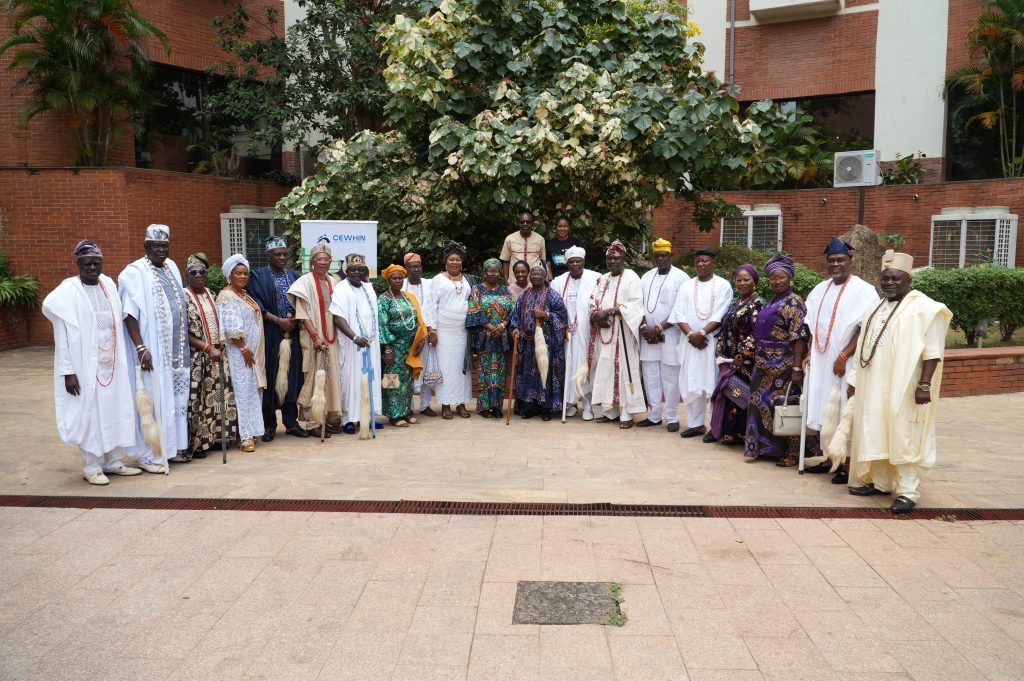
At CEWHIN, we recognize that lasting solutions to Violence Against Women and Girls (VAWG) requires community-driven approaches that address social norms and power dynamics at the grassroots level.
One of the most effective strategies in our work has been engaging traditional leaders as key partners and change agents in the fight against gender-based violence.
Traditional leaders hold significant influence in shaping cultural norms, resolving disputes, and guiding community values. Their voices carry authority and trust, making them critical allies in challenging harmful beliefs and promoting the protection of women, girls, and persons with disabilities.
Why Traditional Leaders Matter in the Fight Against VAWG
In many Nigerian communities, traditional leaders serve as custodians of culture and first points of contact for conflict resolution. Practices related to marriage, inheritance, discipline, and gender roles are often interpreted and enforced through traditional structures.
CEWHIN’s approach recognizes that transforming social norms requires working with these structures rather than against them. By equipping traditional leaders with knowledge, tools, and accountability frameworks, they become advocates for gender justice within their own communities.
CEWHIN’s Community-Led Engagement Model
CEWHIN has implemented a community-led framework that positions traditional leaders as frontline responders and champions for the prevention of VAWG. Through structured trainings, dialogues, advocacy sessions and town hall meetings, the Centre works to:
- Build awareness on the forms, causes, and consequences of violence against women and girls.
- Promote culturally sensitive but rights-based approaches to conflict resolution.
- Encourage public commitment to zero tolerance for abuse and exploitation.
These engagements are designed not as one-off interventions but as sustained partnerships that embed gender protection within existing community governance systems.
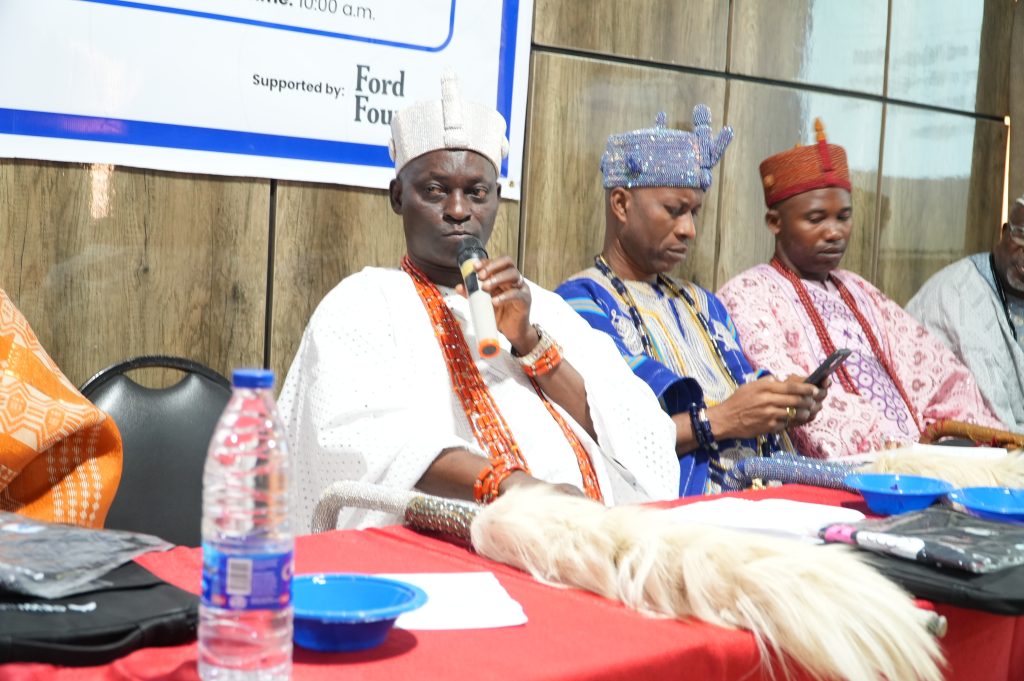
From Gatekeepers to Advocates
Through CEWHIN’s programmes, traditional rulers, chiefs, and community leaders (including Iyalode’s and Iyaloja’s) are supported to transition from passive observers to active defenders of women and girls. Many traditional leaders now:
- Speak publicly against harmful practices such as child marriage and sexual exploitation
- Participate in community taskforces and protection committees
- Mediate disputes with survivor-centered approaches
Impact and Lessons Learned
CEWHIN’s engagement with traditional leaders has shown that when cultural authorities champion women’s rights, resistance to change decreases and community buy-in increases. Dialogue replaces denial, and harmful norms begin to shift. Communities that once viewed VAWG as a private matter are increasingly recognizing it as a public concern that demands collective action.
CEWHIN remains committed to strengthening community-led approaches to ending violence against women and girls. By continuing to work with traditional leaders as partners in progress, the Centre is fostering safer, more inclusive communities where women and girls can live free from fear and violence.